
From night shifts to inspections: why car dealerships and clinics flee Excel
At first glance, car dealerships and private clinics have nothing in common. One sells metal pets and books service appointments; the other looks after patients' health. But peek under the hood of either business and you'll see the branch manager at the dealership and the team lead at the clinic wrestling with the exact same administrative pain.
Both industries run on high-intensity work, sector-specific regulation, and — most of all — complicated working time.
Shift work and the rhythm of the day
In dealerships and clinics alike, the workday rarely runs from 9 to 5. There are day shifts and night shifts, on-call rotations, weekend coverage, and public-holiday work.
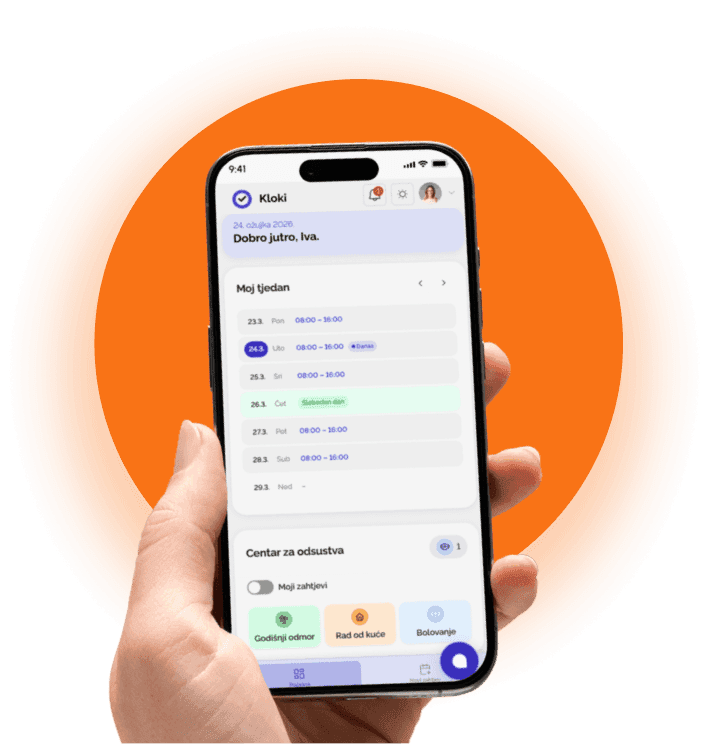
The pain starts when shift work is tracked in legacy spreadsheets. Manual hour entry produces errors that accounting feels at the end of the month. A proper digital schedule lets you plan shifts ahead of time, and keeps hour-tracking transparent for both employer and employee.
Overtime and holiday pay
Whether it's a sales advisor wrapping up a late vehicle handover or a nurse staying past shift for an emergency patient, overtime in these sectors is the rule, not the exception.
If you want to walk into a labour-code audit without breaking a sweat, your employee records have to capture, accurately:
- Actual hours worked, including weekends.
- Public holidays (paid at the higher rate dictated by your local labour code).
- A clean, exportable payroll report — generated automatically, not stitched together in Excel.
In most jurisdictions, every hour worked must be recorded, and inspectors can issue fines that run into the thousands per finding. Digital tools like Kloki generate that payroll report for you, which removes the single biggest source of audit risk.
Absences, sick leave, and travel orders
Clinics send staff to continuing-education courses; dealerships send salespeople to manufacturer trainings. That means travel orders and per-diems. Without a central system, paper gets lost and accounting loses its mind.
Sick-leave history and sick-note documentation have to live in the employee's personnel file too. In many countries, once an employee crosses a sick-leave threshold, properly filed documentation is the only way to claim reimbursement from the public health insurer — and the only way to defend the case if the claim is challenged. For more on the paper-vs-digital side of this, see why HR documents no longer need paper or a printer.
Personnel files and a certificate database
The other thread that ties these two sectors together is strict regulation. Dealership service technicians need valid certifications to work on certain tools or electric vehicles; clinical staff need active professional licences.
A digital certificate database inside Kloki notifies you before a licence expires — which is the difference between staying compliant with occupational-health-and-safety rules and failing your next inspection.
One simple system, big savings
Their worlds look different, but dealerships and clinics need the same thing: the cleanest possible control over working time.
A system that runs without spreadsheets gives both sectors:
- Time back. Managers spend less time on admin and more time with clients or patients.
- Security. Data sits on EU-hosted infrastructure, GDPR-aligned by default.
- Peace of mind. Every PTO day, work-from-home day, and shift is logged in line with the rules.
Whether you sell cars or care for people's health, digitising working time is the fastest path to a tidy back office and happier staff.
If you want to see what that looks like, you can try Kloki free for 7 days.