
Entrepreneur stories: First steps, challenges, and the reality of self-employment
At first glance, running your own small business can look like a pretty simple undertaking. But behind the scenes there are a lot of business processes that have to happen every day to keep things running — and they often turn into a grind. That is exactly why running your own business so often comes down to a constant balancing act between creative work and admin.
In this story we share the experience of Ana, owner of Zirkanje, who works in digital marketing with small and mid-sized businesses. She walked us through her entrepreneurial path and the challenges she runs into day to day.
How did it all start?
For years I dreamed about having something of my own, but I never had the courage to actually do it. Before my last full-time job I told myself it would be the last job I ever did for someone else — and that turned out to be true. I didn't want to work for anyone again, I didn't want a 9-to-5 in an office. I wanted to create my own opportunities, my own work, and to work when I wanted to, while using my knowledge and experience to help others. The concrete path looked like this: after I quit, I took two months off and started writing a business plan for the self-employment grant from the national employment service, which I ended up getting. Actually registering the business was probably the hardest part — there was a lot of paperwork to fill out and carry to different offices, and the whole time I kept second-guessing myself about whether I had everything in order.

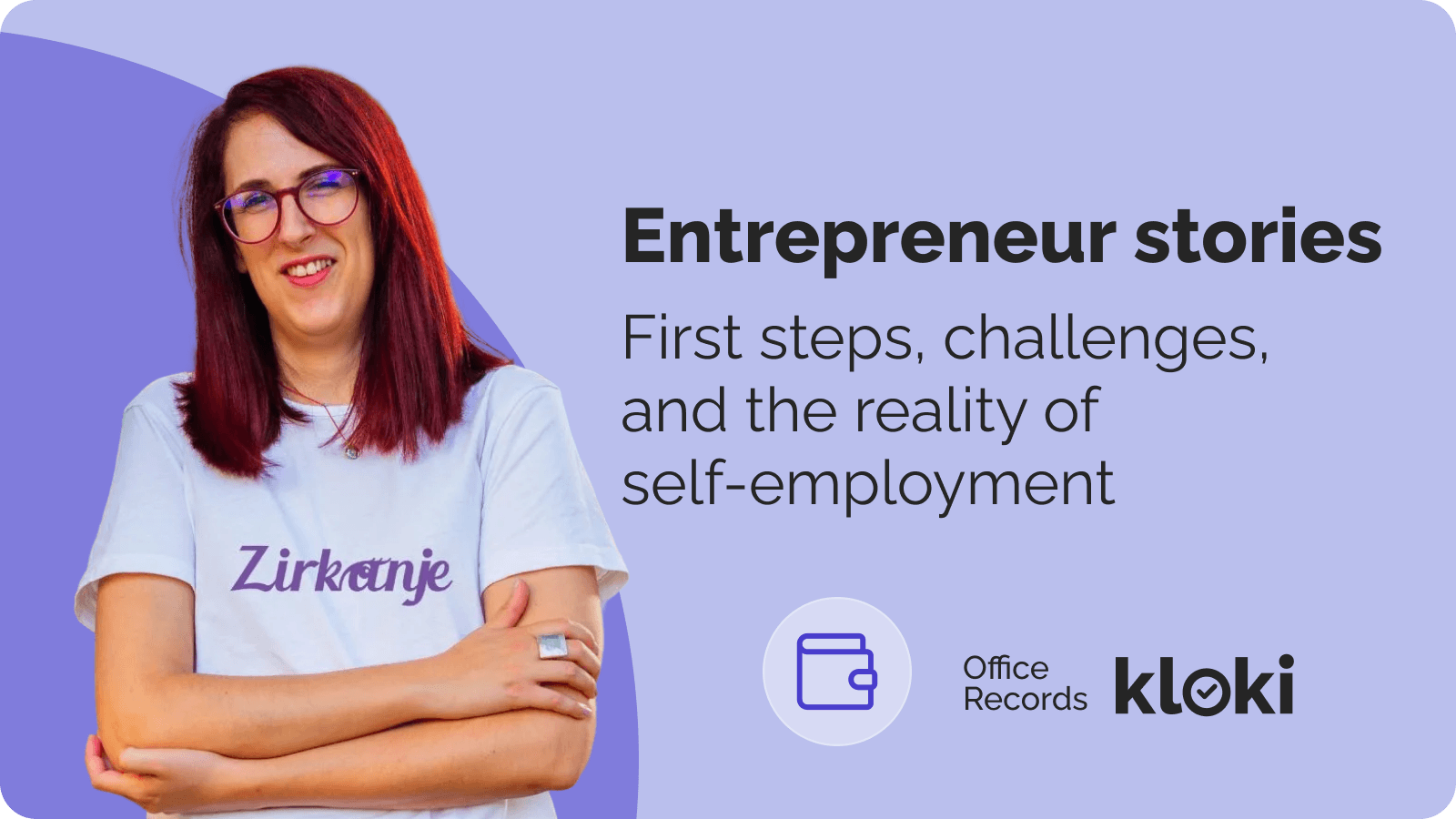
Ana Kanazir, owner of Zirkanje (photo: Ida Tomašković)
What does a typical workday look like for you, from morning to evening?
My workday looks like this: I sleep longer than I used to, and I enjoy it. I get up around 9, have a coffee, and work through tasks in the order I have them in my paper weekly planner. I always start with whatever is most important or has the tightest deadline, then move on to the rest.
No two days look the same, because the workload is not always the same, and some things I only do on Fridays so I don't waste time on them mid-week. The work isn't only client work — I try to keep learning as much as I can, and I set time aside for that almost every day, plus I free up time when needed for prospecting and meetings. I also write for a music site, so part of the work is going to concerts, which I really enjoy. As for hours, I try to get the work done in the first half of the day, and split the rest between calls, meetings, prep for the next day, or training.
How much of your week goes to admin and organization?
The admin side is my biggest pain point because there are things that aren't clear to me, and when that happens I ask my accountant. As a flat-rate sole trader, I keep a revenue ledger that doesn't take much time — I just log payments as they come in. Friday is always my "brand day," so that is when I prep things for the next week, do planning, and clean up anything I didn't get to mid-week.
Are there admin tasks that especially get in the way or pull your focus from the actual work?
The biggest admin headaches for me are new requirements, like e-invoicing and digital fiscalization rollouts, where I am still not sure what they will look like in practice. I went with the free option provided by the tax authority and got it set up just by entering my data online. There is also a yearly tax form for flat-rate businesses I haven't filled out before, so I have no idea what I am walking into.
How are you currently tracking your work?
I don't keep a written work record, but I know roughly how much time each task takes me, so I block out that much time for it. Starting this year I plan to track what I do and how long it takes more carefully so I can organize the work better.
Have you ever run into mismatched paperwork, or a moment where some piece of information was missing exactly when you needed it? Have you digitized any of your business processes?
I'm often missing information, especially when something is changing or a new rule is introduced. The same problem comes up when I'm doing something for the first time and don't know how it should be done. The internet is usually full of conflicting answers, and it is hard to tell which one is correct. A concrete example: when I was registering my business I was pretty confused and didn't know what to do or how. The training I took at a small-business support office helped a lot, but I still made mistakes. I had to go to the pension office twice — the first time I came too early, and there were questions on the form I couldn't answer myself, so the clerk at the counter ended up filling them in.
I haven't digitized much yet, but that's on the list for this year.
If you could solve one part of running the business with a single click, what would it be and why?
Honestly, a lot of it is already pretty simple as a flat-rate sole trader and doesn't take much of my time. In the invoicing app I use, my clients are already saved, and I can duplicate an invoice and just change the details. I write the revenue ledger by hand on paper, but even that doesn't take long, and I pay social contributions and taxes by scanning a QR code. Ideally those parts could automate themselves so I wouldn't have to think about them — but that might be asking too much.
How do you imagine the ideal day of an entrepreneur, when everything is organized, in order, and free of administrative stress?
The ideal day, I picture as one where I don't have to worry about invoices, the revenue ledger, rule changes, data, and whether I did everything correctly. On the work side, the ideal day is one where I know exactly what I am doing and when, and everything goes according to plan, with no distractions.
Ana's story shows that entrepreneurship is much more than just an idea and creative work. Behind every project there is planning, organization, and admin that often stays invisible — but is an unavoidable part of daily life.
It's exactly those "quiet" processes that can eat away at the time and focus an entrepreneur most needs for growing the business and working with clients. That is where tools like Kloki earn their place in the day-to-day — helping simplify record-keeping and organization, cutting down admin stress, and giving time back to the parts of the work that matter most.
Want to spend less time on admin and more on the work that actually matters? Try Kloki for free and see how much easier the day feels when records keep themselves.